The 24-Hour Blueprint: How the World’s Most Measured People Engineer Their Biology for 100+ Healthy Years
Time is the only non-renewable resource we have. Yet, most of us spend it passively, hoping that genetics and luck will grant us a long, disease-free life. Standard medicine—what Dr. Peter Attia calls “Medicine 2.0″—waits until you are broken to fix you. It waits for the heart attack, the tumor, or the cognitive decline.
But what if you didn’t wait? What if you treated your biology like a high-performance system that requires daily, precise calibration?
In the ultra-exclusive world of advanced biohacking and Medicine 3.0, the world’s most measured people do exactly that. They don’t guess; they quantify. By tracking everything from continuous blood glucose to nighttime heart rate variability (HRV), they engineer their days to slow down their biological aging velocity.
Here is the exact 24-hour blueprint based on the science of human optimization, designed to help you reclaim your lost years and dominate your “Marginal Decade” (the last ten years of your life).
Phase 1: The Night (Glymphatic Clean-up)
For the elite, longevity doesn’t begin when they wake up; it begins when they go to sleep. Sleep is not a luxury; it is a profound physiological necessity.
According to research published in Science, deep sleep activates the glymphatic system, the brain’s waste clearance mechanism. Think of it as a nightly power wash that removes amyloid-beta and tau proteins—the exact metabolic waste products associated with Alzheimer’s disease.
The Protocol:
- The Dark Cave: Absolute darkness and a bedroom temperature calibrated precisely to 18-19°C (65-66°F) to facilitate the natural drop in core body temperature required for deep sleep.
- Data Tracking: Wearables track HRV and resting heart rate (RHR). A high HRV indicates a nervous system that is highly adaptable and resilient to stress, a key biomarker for longevity.
- Pre-sleep Stack: Magnesium Threonate and Apigenin to downregulate the nervous system, as popularized by neurobiology protocols from Stanford.
Phase 2: The Morning (Hormesis & Metabolic Priming)
The morning is about setting the circadian rhythm and leveraging hormesis—a biological phenomenon where a controlled, acute stressor triggers a robust adaptive response, making the organism stronger. As Dr. David Sinclair’s research at Harvard Medical School suggests, activating our longevity genes (like sirtuins) requires making the body slightly uncomfortable.
The Protocol:
- Circadian Light Exposure: Viewing natural sunlight within 30 minutes of waking. This suppresses melatonin, spikes cortisol at the correct time, and sets a biological timer for sleep later that night.
- Cold Thermogenesis: A 3-minute plunge in water at 10°C (50°F). This isn’t just about waking up; it induces a massive release of norepinephrine (up to 500%), reduces systemic inflammation, and stimulates brown adipose tissue (BAT), which improves metabolic health.
- Delaying Caffeine: Waiting 90-120 minutes before the first coffee allows adenosine to naturally clear from the brain, preventing the dreaded afternoon crash.
Phase 3: The Fuel & Data (Metabolic Flexibility)
The most measured individuals on earth do not follow generic diets. They eat based on real-time data. High levels of visceral fat (WHtR) and poor insulin sensitivity are silent killers that accelerate cellular aging.
The Protocol:
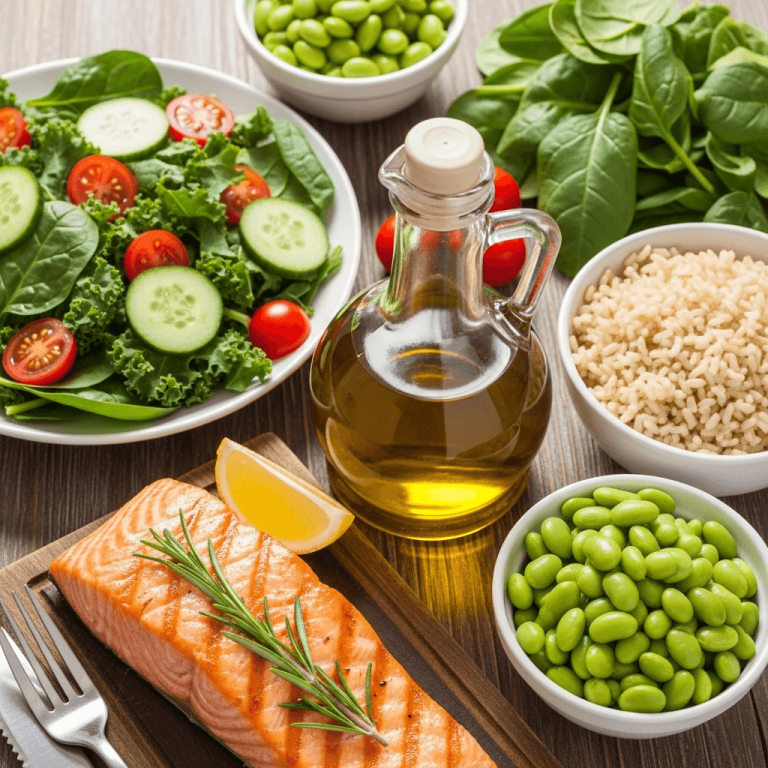
- Continuous Glucose Monitoring (CGM): Wearing a CGM allows them to see exactly how specific foods impact their blood sugar. The goal is “metabolic flexibility”—the ability to switch seamlessly between burning glucose and burning fat while keeping insulin spikes as flat as possible.
- Targeted Supplementation: Instead of standard multivitamins, they use precise geroprotectors. This might include NMN to boost NAD+ levels (crucial for mitochondrial function), or specific interventions to lower ApoB, the most accurate lipid marker for cardiovascular risk.
Phase 4: The Armor (VO2 Max & Muscle)
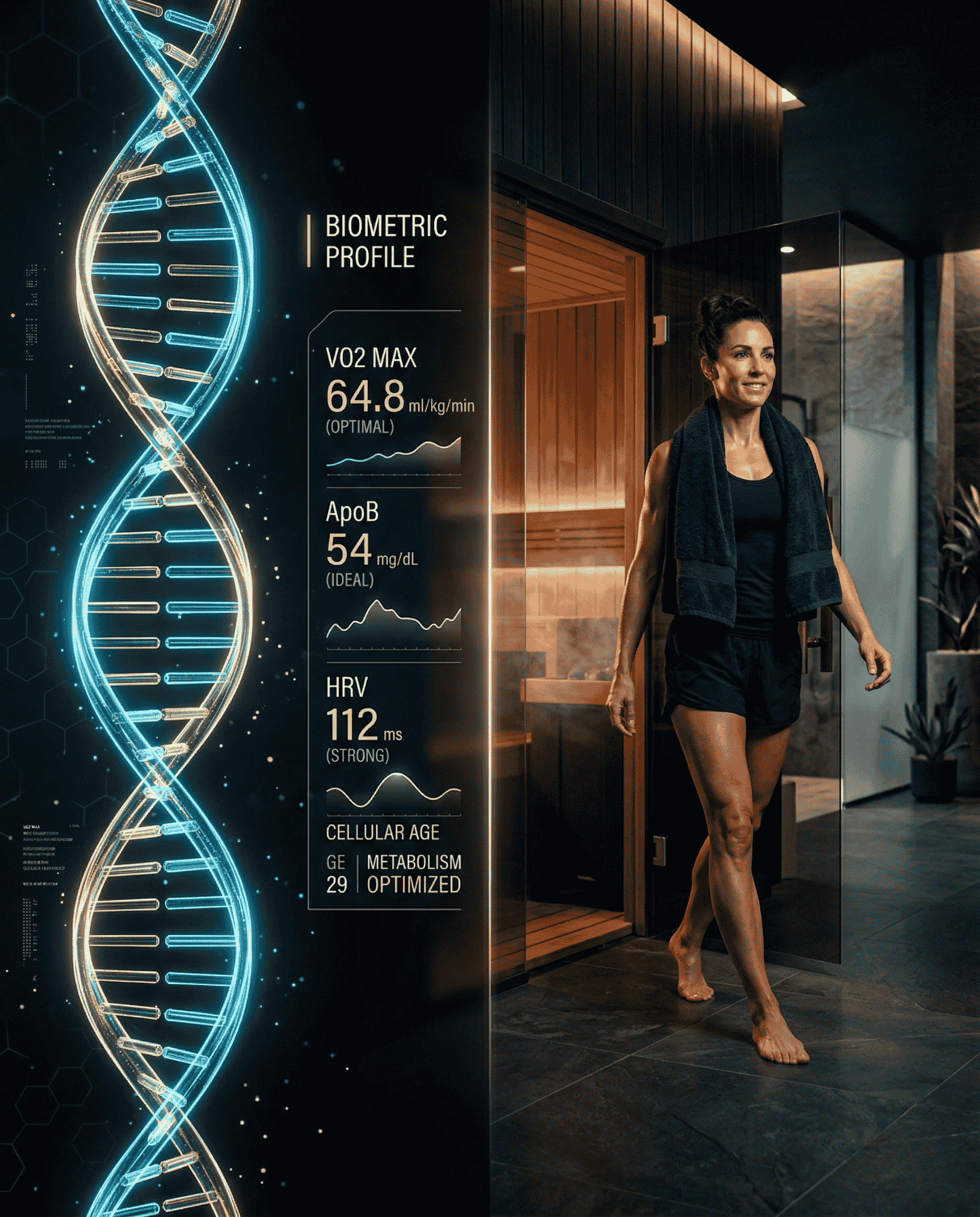
If there is one metric that predicts how long and how well you will live, it is VO2 Max (your maximum rate of oxygen consumption). A study in the Journal of the American College of Cardiology demonstrated that elite cardiorespiratory fitness profoundly reduces all-cause mortality.
Furthermore, muscle is the body’s metabolic sink for glucose. As we age, we face sarcopenia (muscle loss), which leads to frailty—the enemy of longevity.
The Protocol:
- Zone 2 Training: Spending 3-4 hours a week in Zone 2 cardio (working at a pace where you can barely hold a conversation). This builds a massive mitochondrial base and cardiovascular efficiency.
- VO2 Max Intervals: One day a week of maximum effort intervals (e.g., 4 minutes all-out, 4 minutes rest) to push the ceiling of oxygen utilization.
- Heavy Resistance Training: Lifting heavy weights to maintain bone density and muscle mass, acting as biological armor for the later decades of life.
From Hacking to Mastery
You don’t need a million-dollar laboratory in your home to live like the 1%. However, you absolutely must stop guessing. Generic health advice is designed for the statistical average, but your biochemistry is entirely unique.
To optimize your Aging Velocity, you need to identify your specific metabolic bottlenecks—what we call “Biological Blockers”—whether that’s hidden inflammation, elevated ApoB, or a declining VO2 Max.
Are you ready to stop guessing and start engineering your health? You can discover your true Biological Age and identify your top 3 metabolic blockers entirely for free. And for those ready to take full control, our Bio-Engine v4.2 can generate a deeply personalized, 50+ page longevity protocol based on a 3-minute diagnostic survey. Reclaim your lost years today.
Discover Your Biological Age & Get Your Protocol
Scientific References & Further Reading:
- Xie, L., et al. (2013). Sleep Drives Metabolite Clearance from the Adult Brain. Science, 342(6156), 373-377.
- Mandsager, K., et al. (2018). Association of Cardiorespiratory Fitness With Long-term Mortality Among Adults Undergoing Exercise Treadmill Testing. JAMA Network Open.
- López-Otín, C., et al. (2013). The Hallmarks of Aging. Cell, 153(6), 1194-1217.
- Sniderman, A. D., et al. (2019). ApoB in Clinical Care. JACC.